Reports
Historic Declaration of Nepal’s First Dignified Menstruation-Friendly Ward, Lalbandi Municipality Ward No. 3, Sarlahi
The declaration of Lalbandi Municipality Ward No. 3, Sarlahi, as Nepal’s first Dignified Menstruation-Friendly Ward on April 24, 2026 (Baisakh 11, 2083) marks a historic milestone in the country’s journey toward social transformation, human rights realization, and sustainable development through Dignified Menstruation. This achievement demonstrates how local governance, community ownership, and institutional commitment can collectively challenge and dismantle deeply rooted menstrual discrimination.
Menstrual discrimination—manifested through stigma, silence, restrictions, exclusion, violence, and deprivation of resources—is a widespread form of sexual and gender-based violence and a violation of fundamental human rights. It affects menstruators throughout their life cycle and reinforces unequal power relations, patriarchy, and social exclusion. In response, the Dignified Menstruation framework offers a transformative, decolonized, human rights-based, and life-cycle approach centered on four core principles: dignity, freedom, equality, and non-discrimination.
This historic declaration was achieved under the “Menstrual Dignity for SRHR in All Diversities” project, implemented from November 2023 to October 2026 by the Radha Paudel Foundation (RPF), PACE Nepal, and the Child Protection Organization (CPO), with support from Amplify Change. The project aims to eradicate systematic menstrual discrimination in Nepal and promote Dignified Menstruation as a fundamental human right and an entry point for Sexual and Reproductive Health and Rights (SRHR).
Within Lalbandi Municipality, the project has been implemented in Ward Nos. 3, 9, and 10. Among these, Ward No. 3 demonstrated exceptional readiness and commitment by fulfilling a wide range of indicators required under the Dignified Menstruation-Friendly Ward Guideline and the Resolution Motion on Dignified Menstruation (Chaitra 8, 2081). Through strong local leadership, institutional engagement, and active community participation, the ward successfully transformed multiple spaces—including homes, schools, health facilities, and the ward office—into Dignified Menstruation-friendly environments.
The process involved establishing a ward-level coordination committee, conducting readiness assessments and household visits, organizing training sessions and dialogue programs, facilitating door-to-door awareness campaigns, strengthening institutional mechanisms, and continuously monitoring progress through evidence-based verification. A wide range of stakeholders—including municipal authorities, schools, health facilities, women’s groups, youth clubs, child clubs, community leaders, and Female Community Health Volunteers—played key roles in this transformation.
Major achievements include institutionalizing Dignified Menstruation within ward governance, creating DM-friendly homes and schools, improving access to SRHR-related health services, addressing menstrual discrimination as a human rights issue, and promoting environmental sustainability through the 3P model: Person, Pocket, and Planet.
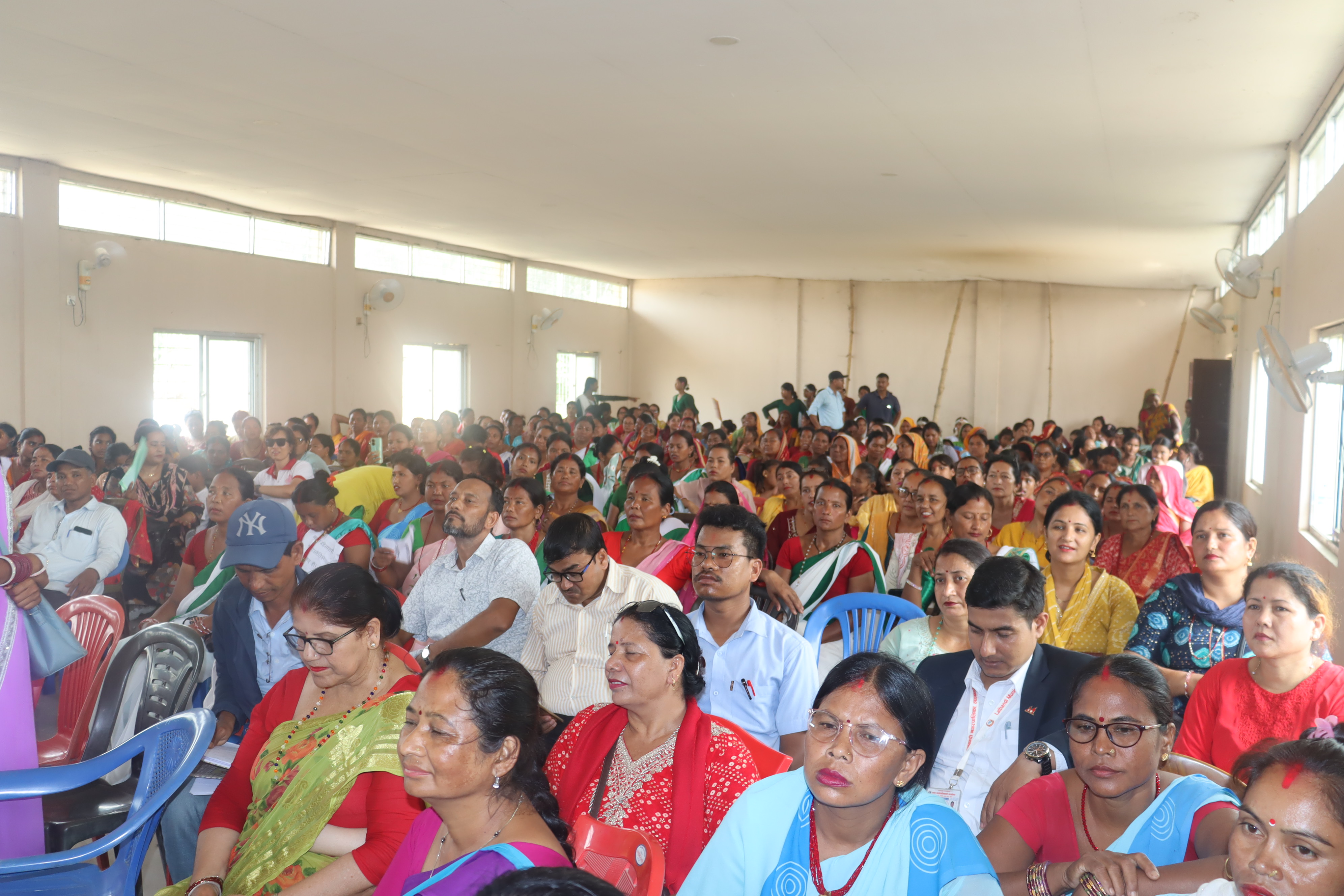
A press conference held on April 22, 2026, followed by the official declaration event on April 24, 2026, brought together elected representatives, government officials, civil society organizations, journalists, and over 400 community participants to celebrate this historic achievement. The event symbolized a collective commitment to social justice, equality, and human dignity.
This report documents the full journey of the declaration process, including its conceptual foundations, methodology, achievements, lessons learned, challenges, and future directions. It highlights how Dignified Menstruation can serve as a powerful framework for addressing broader issues such as gender-based violence, child marriage, social exclusion, environmental sustainability, and constitutional rights.
Nepal’s first Dignified Menstruation-Friendly Ward is more than a symbolic declaration—it is a practical and replicable model for systemic transformation. It offers a pathway for local governments, institutions, and communities across Nepal and beyond to reimagine menstruation as a matter of dignity, equality, and justice.
-1773638138.png)